The Lead Nurse for Infection Prevention and Control and two Lead Practice Educators at Great Ormond Street Hospital NHS Foundation Trust (GOSH) addressed the over-use of non-sterile gloves through education and training. This has improved patient safety and experience and staff are now following evidence-based practice rather than wearing gloves out of habit.
Ecovamed publishes a first comparative study on the carbon footprint of nitrile gloves depending on the production country, and the correlation with its Environmental Label of Origin
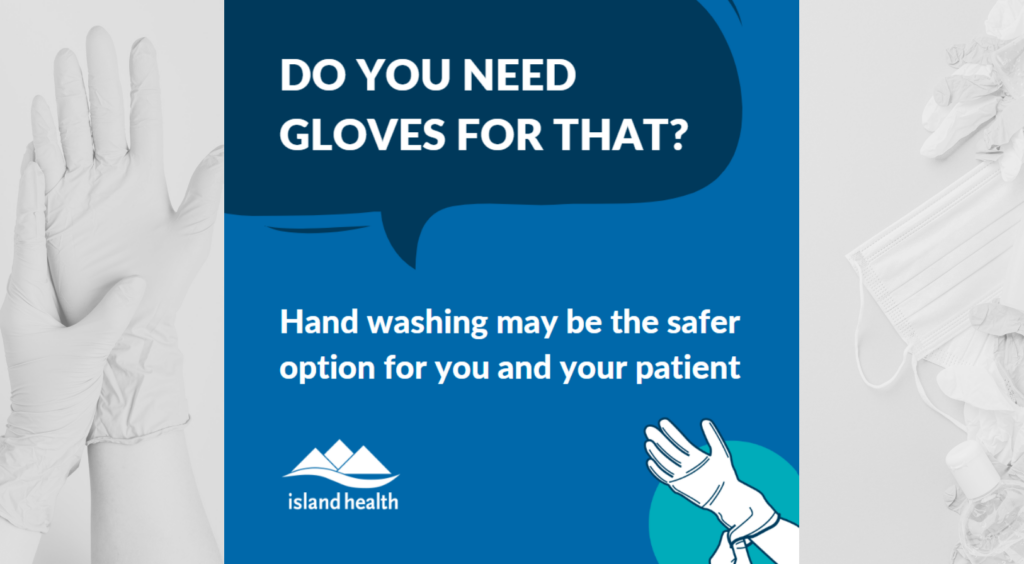
Since May 1, 2023, Island Health has launched the “Gloves Off!” campaign to create a noticeable and measurable decrease in inappropriate glove use through a paradigm shift in organizational culture.
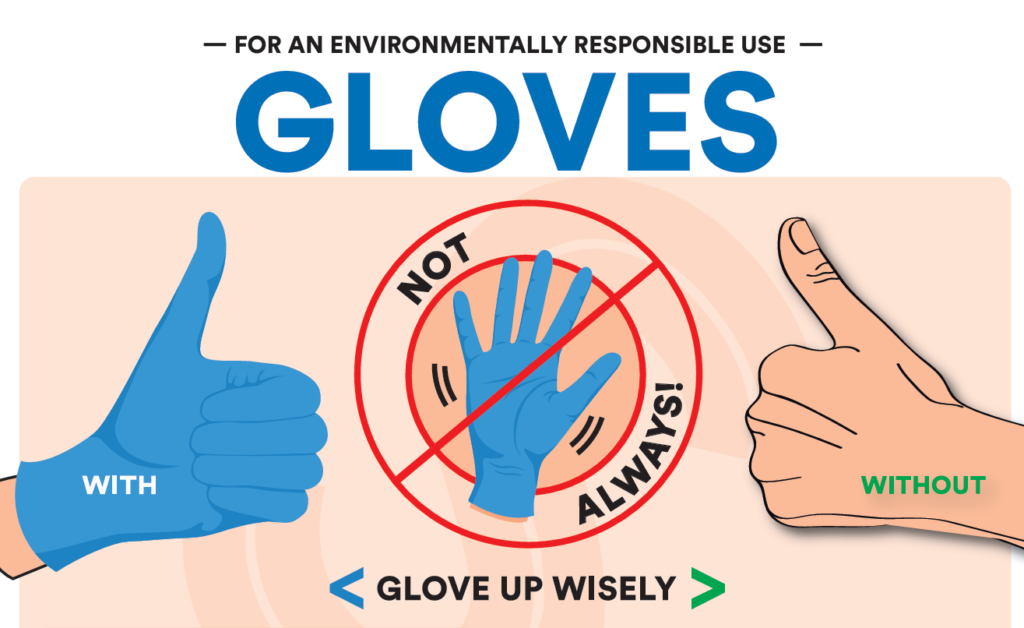
Launched in fall 2023 in collaboration with the Réseau d’Action pour la Santé Durable du Québec (RASDQ), the Association québécoise des médecins pour l’environnement (AQME), Synergie Santé Environnement (SSE) and CASCADES, and with the support of the Association des médecins d’urgence du Québec (AMUQ) and Choisir avec soin, the “Les Gants, pas tout le temps” campaign aims to raise awareness among healthcare personnel of the appropriate use of gloves, as proposed by the WHO in the information sheet on glove use.
This webinar, hosted by CASCADES and the Canadian Coalition for Green Health Care, explored approaches used by organizations to address unnecessary glove use. Manufactured from synthetic materials such as latex, nitrile, or vinyl, single-use gloves carry financial costs as well as environmental and health impacts. During the session, representatives from the NHS, British Columbia, and Quebec provided an in-depth overview of the development of their initiatives to promote appropriate glove use in health care settings.
This video is shared by the Royal College of Nursing as part of the Quebec campaign “les Gants, pas tout le temps!” In 2022, the UK’s Royal College of Nursing (RCN) launched the Glove Awareness Week with the aim of raising awareness among healthcare workers of the environmental impact of unnecessary glove use, and offering tips and tricks to limit unnecessary glove consumption and thus contribute to a more sustainable health
This charter can be used as a stand-alone resource or alongside existing organizational templates. It is a structured tool that builds on the Model for Improvement by integrating sustainability prompts into standard project charter components. It follows the SE-QI approach, which embeds sustainability within existing QI steps and structures, rather than adding it as a separate process. Prompts are woven throughout core elements such as scope, problem definition, and measurement planning. Each slide also includes accompanying speaking notes with additional guidance for each step.
This webinar focuses on infection prevention and control (IPAC) strategies related to reusable medical devices and equipment as part of the “reusable first” webinar series. Experts discuss how proper cleaning, disinfection, and sterilization are essential to maintaining patient safety while reducing environmental waste. The session emphasizes the importance of clear protocols, staff training, and collaboration between infection control and sustainability teams to support safe reuse practices in health care settings.
This webinar, the fourth presentation in the “Reusables First” series, explores lessons learned from unsuccessful attempts to implement reusable products in healthcare settings. It highlights challenges such as increased workload, logistical complexity, and difficulty meeting staff needs. Speakers present case studies including reusable metal spoons, zero-waste yogurt containers, and reusable surgical textiles. Across organizations, common barriers included delays, loss of momentum, inconsistent stakeholder buy-in, and the lack of early cost analysis. The session emphasizes that sharing failures is important for helping other sustainability leaders avoid similar pitfalls and improve future implementation of reusable healthcare practices.