The primary objectives of this research were to determine: • How are health systems across provinces and territories in Canada being called to account for GHG emissions now, and what are some of the near-term expected shifts? • What might GHG emissions accounting norms look like for health systems in Canada, given emerging international standards in health systems, or in other sectors? In developing the answers to these questions, an interpretation of the findings was completed to synthesize the information and identify the underlying drivers and mechanisms that have led to greater levels of GHG emissions accountability in particular jurisdictions, and to consider the likelihood that these mechanisms will lead to an increased level and scope of GHG emissions accountability in the Canadian health care sector more broadly.
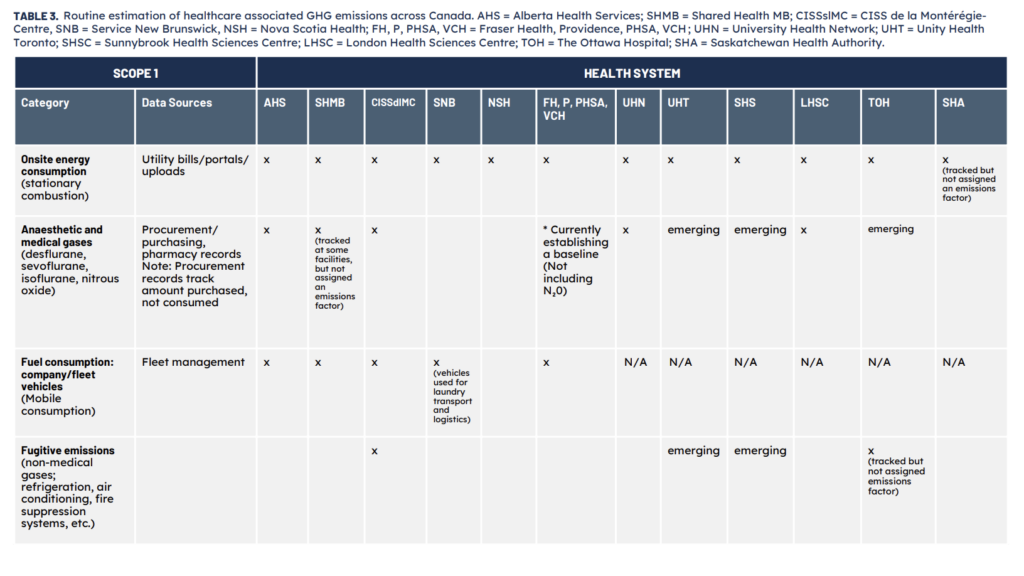
This report provides an overview of how greenhouse gas (GHG) emissions are estimated in healthcare and information on the current state of GHG emissions estimation in healthcare organizations across Canada.
Report on proceedings: This workshop included presentations on methodological approaches to GHG emissions estimation, examples of current and planned GHG emissions estimation work in Canada, and discussions of ways to advance this work to support standardization and comparability across jurisdictions. Opportunities and challenges are presented at the end of this report, along with suggestions for action or investment.
WHO is calling on all civil society organizations and other partner organizations to engage with the campaign and accelerate progress at achieving effective hand hygiene at point of care!
The SQUIRE-ENV extension is being led by the Centre for Quality Improvement and Patient Safety (CQuIPS) in collaboration with CASCADES and national and international quality improvement leaders. Building on the internationally recognized Standards for Quality Improvement Reporting Excellence (SQUIRE), this extension establishes structured guidance for reporting environmental sustainability in quality improvement projects where sustainability is a co-benefit or primary aim. Because SQUIRE is widely used by journals, conferences, and healthcare systems to report improvement work, SQUIRE-ENV will help embed sustainability into how QI initiatives are designed, documented, and shared. Publication is anticipated in 2026.
Ecovamed publishes a first comparative study on the carbon footprint of nitrile gloves depending on the production country, and the correlation with its Environmental Label of Origin
Since May 1, 2023, Island Health has launched the “Gloves Off!” campaign to create a noticeable and measurable decrease in inappropriate glove use through a paradigm shift in organizational culture.
Launched in fall 2023 in collaboration with the Réseau d’Action pour la Santé Durable du Québec (RASDQ), the Association québécoise des médecins pour l’environnement (AQME), Synergie Santé Environnement (SSE) and CASCADES, and with the support of the Association des médecins d’urgence du Québec (AMUQ) and Choisir avec soin, the “Les Gants, pas tout le temps” campaign aims to raise awareness among healthcare personnel of the appropriate use of gloves, as proposed by the WHO in the information sheet on glove use.