Introduction
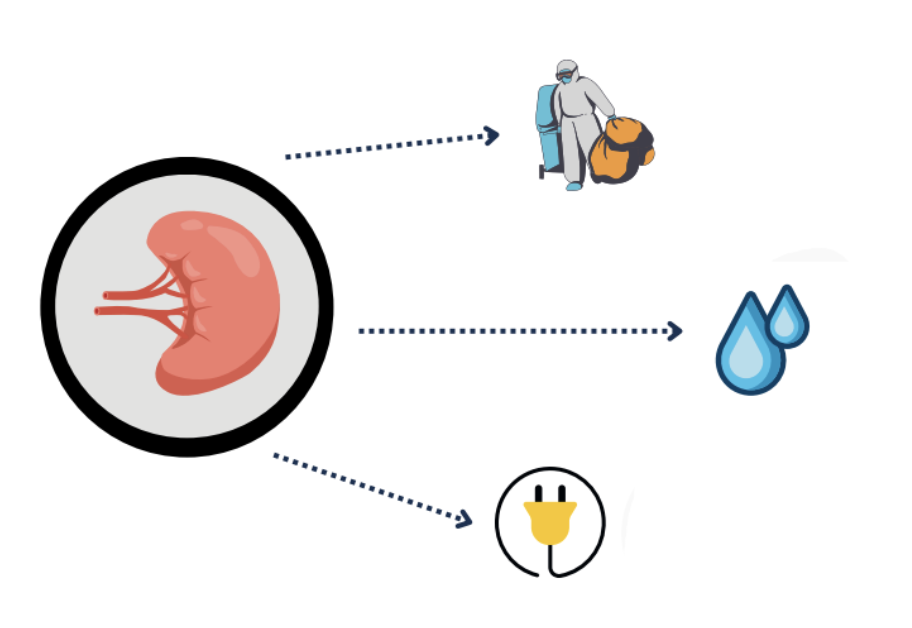
Kidney care is among the most resource-intensive areas of healthcare, relying on carbon-heavy sectors such as pharmaceuticals, water, energy, transportation, and waste management. As the prevalence of chronic kidney disease and end-stage kidney disease rises in Canada, so too will its environmental footprint. Dialysis, in particular, has a disproportionate impact, consuming large volumes of water and electricity while generating significant waste. Climate change is also increasing the incidence and progression of kidney disease through factors like extreme heat and air pollution, further driving demand for care. Without intervention, this cycle will intensify both health and environmental burdens.
Sustainable kidney care requires coordinated action across the care continuum. Key tools include strengthening prevention and early detection of chronic kidney disease, optimizing prescribing practices, and reducing low-value or resource-intensive interventions. Building capacity among providers, investing in climate-conscious infrastructure, and measuring environmental impacts through standardized metrics enable more informed, sustainable decision-making.
A system-wide approach is essential. Education empowers kidney care providers to integrate sustainability into clinical practice, while partnerships across sectors support innovation and policy development. Embedding environmental metrics into quality improvement efforts and fostering collaboration between clinicians, researchers, and health systems will drive meaningful change toward resilient, low-carbon kidney care.
Playbook: Sustainable Kidney Care

Suggested Citation:
Stigant C, Nour S, Finkle N, Devitt K. Sustainable Kidney Care. Version 1.0. [Internet]. CASCADES; 2024 [cited DATE]. Available from: https://cascadescanada.ca/.