Appropriate Glove Use
Summary / Key takeaways
Single-use gloves made from synthetic materials such as latex, nitrile, and vinyl have financial, environmental, and health impacts. While gloves are essential in some clinical situations, they are often used when hand hygiene alone would be more appropriate. Since the COVID-19 pandemic, unnecessary glove use has increased significantly, despite evidence showing that hand hygiene remains the safest and most effective infection prevention measure.
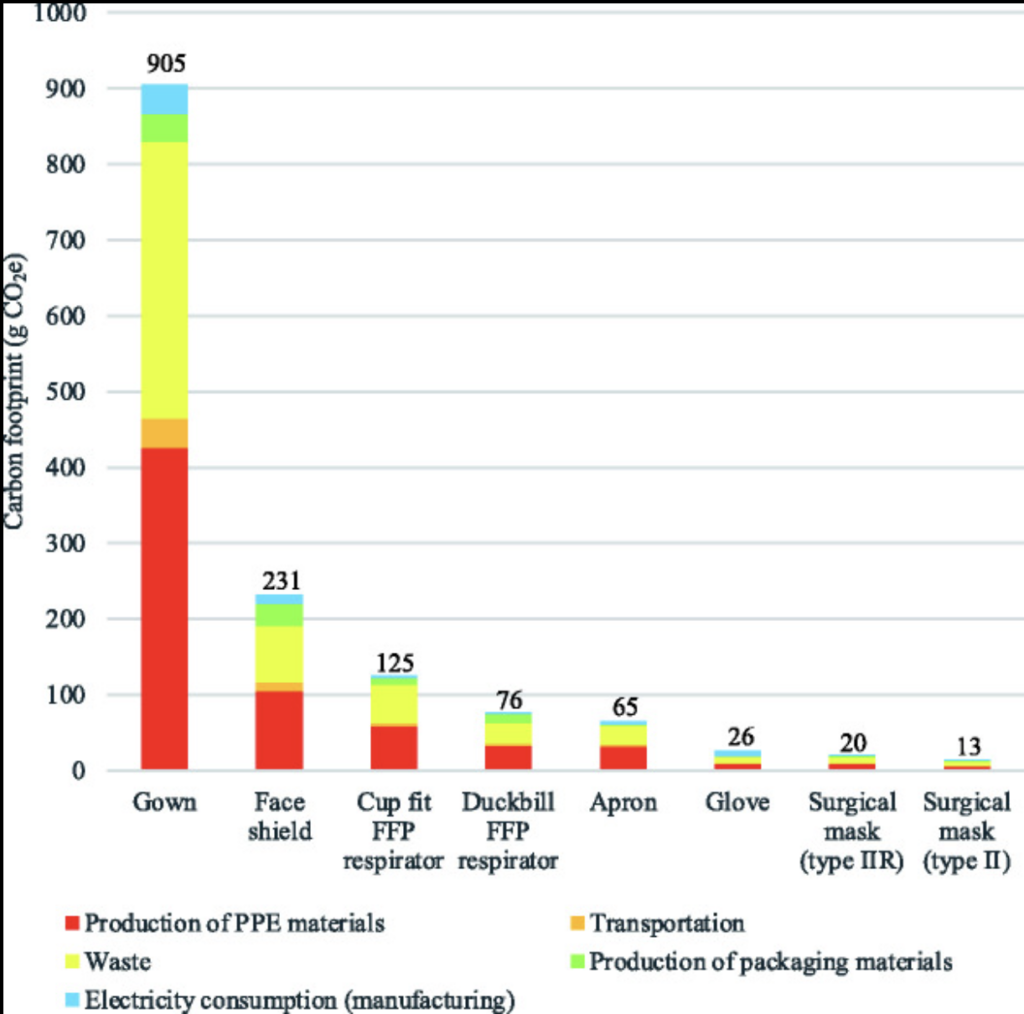
The environmental impact of glove use is substantial. The carbon footprint of a single nitrile glove is nearly four times greater than that of a 20-second handwash and ten times greater than using 3 mL of alcohol-based hand rub. Inappropriate glove use can also create a false sense of security, increasing the risk of cross-contamination for patients and healthcare workers.
CASCADES offers evidence-based resources on this webpage to support healthcare teams in implementing appropriate glove use practices and other sustainable healthcare change ideas that promote safe, high-quality care while reducing environmental impact.
Slide deck: Gloves Off Campaign Presentation (Slide deck)
Launched in fall 2023 in collaboration with the Réseau d’Action pour la Santé Durable du Québec (RASDQ), the Association québécoise des médecins pour l’environnement (AQME), Synergie Santé Environnement (SSE) and CASCADES, and with the support of the Association des médecins d’urgence du Québec (AMUQ) and Choisir avec soin, the “Les Gants, pas tout le temps” campaign aims to raise awareness among healthcare personnel of the appropriate use of gloves, as proposed by the WHO in the information sheet on glove use.
Suggested Citation:
Cruz, A, Simms, N, Ritcey, G, MacNeill, A, Miller, F. Sustainability Embedded Quality Improvement (SE-QI). Version 1.0. [Internet]. CASCADES; 2026 [cited DATE]. Available from: https://cascadescanada.ca/.
Supporting Resources
World Health Organization: World Hand Hygiene Day
WHO is calling on all civil society organizations and other partner organizations to engage with the campaign and accelerate progress at achieving effective hand hygiene at point of care!
Website
Environmental impact of personal protective equipment distributed for use by health and social care services in England in the first six months of the COVID-19 pandemic
The environmental impact of PPE is large and could be reduced through domestic manufacture, rationalising glove use, using reusables where possible and optimising waste management.
Article
Use of hand sanitiser as a potential substitution for nonsterile gloves in reducing carbon emissions.
Hence, in settings with frequent use of sharp equipment, open wounds, and mucus membrane exposure, examination gloves should be required. In cases where most pathogens cannot be transmitted through intact skin, the procedure is not seen as an exposure risk, and natural defences form an adequate barrier against transmittable disease, and sanitation of the hands might be an adequate and more ethical consideration for use. We have illustrated some examples to help readers decide when removing gloves for a procedure is appropriate and when it is not.
Article
The Environmental Impact of Hand Sanitizer Ethanol [Internet]. [cité 23 août 2023]. Disponible sur: https://mediahub.unl.edu/media/16495
My research’s purpose was to help fight the global COVID pandemic by helping ethanol producers produce USP grade ethanol as well as study the environmental impacts of producing USP grade ethanol.
Video
Turning lights into flights: estimating direct and indirect rebound effects for UK households
We estimate the direct and indirect rebound effects from energy efficiency improvements by UK households. We allow for the capital cost of the improvement, together with the emissions embodied in the relevant equipment. We find rebound effects to be relatively modest, in the range 5–15%. The anticipated shift towards a low carbon electricity system will lead to larger rebound effects.
Article
United Kingdom : The Gloves are Off
The Lead Nurse for Infection Prevention and Control and two Lead Practice Educators at Great Ormond Street Hospital NHS Foundation Trust (GOSH) addressed the over-use of non-sterile gloves through education and training. This has improved patient safety and experience and staff are now following evidence-based practice rather than wearing gloves out of habit.
Case Study