Introduction
Virtual care is transforming how healthcare is delivered while supporting broader sustainability goals. Traditional models of care often require patients, caregivers, and healthcare providers to travel to clinics, hospitals, and offices, contributing to the environmental impact of healthcare delivery through transportation, facility operations, and resource use. As health systems look for ways to reduce emissions and improve efficiency, virtual care offers a practical and patient-centered alternative for many types of appointments and follow-up care.
The shift toward virtual care has accelerated in recent years, demonstrating both patient demand and the healthcare system’s ability to adopt digital models of care at scale. Virtual visits can reduce unnecessary travel, improve access to care, lower patient costs, and create opportunities for more flexible and equitable healthcare delivery. In regions with cleaner energy grids, the environmental benefits of virtual care are even greater, despite the modest energy demands of digital technologies.
Achieving the full benefits of virtual care requires a thoughtful and evidence-informed approach. Organizations must balance environmental considerations with patient safety, quality of care, equity, and accessibility when determining which visits are appropriate for virtual delivery. Successful implementation also depends on investing in energy-efficient technologies, supporting equitable access to digital tools and connectivity, and integrating sustainability into planning and evaluation processes. By embedding virtual care within broader organizational and climate strategies, healthcare systems can reduce unnecessary emissions while improving patient experience and access to care. Practical guidance, implementation considerations, and decision-support resources can help organizations identify opportunities, measure impact, and strengthen the long-term sustainability of care delivery.
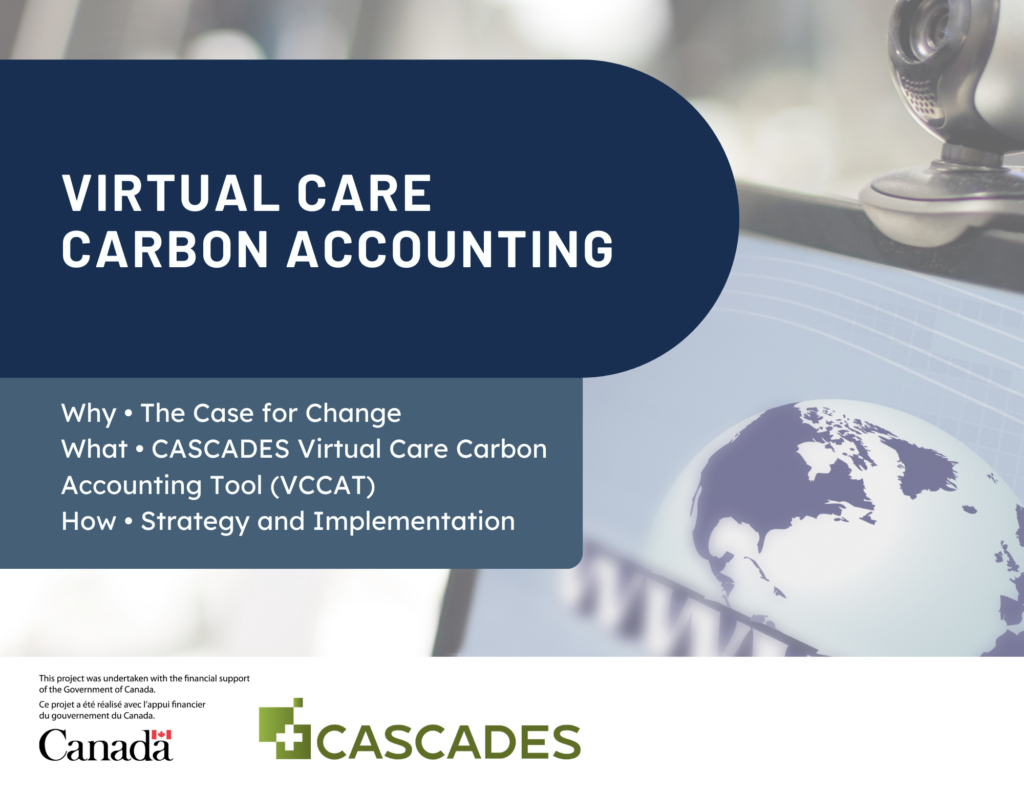
Playbook: Virtual Care Carbon Accounting
Suggested Citation:
Simms N, Tariq M. Virtual Care Carbon Accounting. Version 2.0. [Internet]. CASCADES; 2023 [cited DATE]. Available from: https://