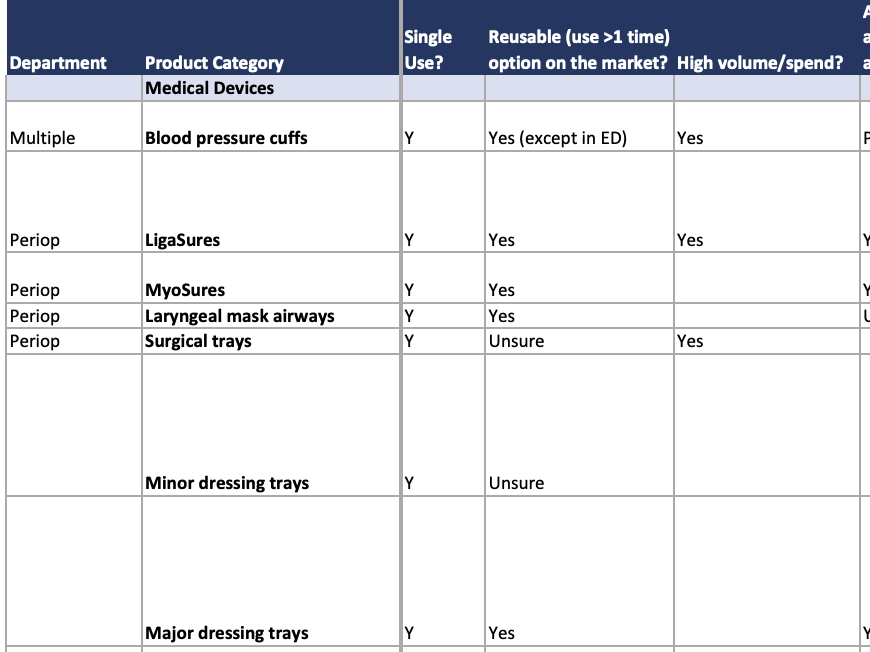
This video presented sustainable perioperative care practices through the use of reusable anesthesia components and outlined the reprocessing pathway at North York General Hospital. It highlighted ways to improve the sustainability of perioperative care and provided an overview of additional learning resources, including an introduction to sustainable health systems e-learning module and an overview of perioperative sustainability action areas from CASCADES.
This webinar explains the “reusables first” approach to sustainable procurement, which prioritizes reusable products and devices over single-use disposables whenever clinically safe to do so. It highlights how healthcare procurement can help reduce the sector’s environmental impact by decarbonizing supply chains and adopting more sustainable practices to support planetary health and climate mitigation. The session features healthcare professionals from British Columbia and Ontario who share their experience implementing reusable-first strategies in clinical settings and discuss practical opportunities for broader adoption across the health system.
This webinar explores the growing movement in Quebec to adopt reusable products and devices as a strategy for advancing sustainability in health care. It explains how shifting from single-use disposable products to reusable alternatives can reduce resource extraction, waste, and pollution while improving supply chain resilience and potentially lowering long-term costs. The discussion features Quebec-based researchers and healthcare professionals sharing insights on the environmental and financial differences between reusable and single-use products, as well as barriers, facilitators, and real-world experiences implementing this transition in health care facilities.
This webinar focuses on infection prevention and control (IPAC) strategies related to reusable medical devices and equipment as part of the “reusable first” webinar series. Experts discuss how proper cleaning, disinfection, and sterilization are essential to maintaining patient safety while reducing environmental waste. The session emphasizes the importance of clear protocols, staff training, and collaboration between infection control and sustainability teams to support safe reuse practices in health care settings.
The following table provides a general list of groups that need to be involved for the successful planning, design or delivery of food infrastructure for planetary health projects; it is offered as a working draft or a guide for you and your teams to upgrade together.
This worksheet is part of the Food Infrastructures for Planetary Health Playbook, which aims tosupport informed decision-making related to food infrastructures for planetary health throughout the planning, design, construction, ongoing operation retrofitting (and even decommissioning) of Canadian healthcare facilities. These sequential stages are known as the Facilities Delivery Lifecycle