All Resources

Food Infrastructures for Planetary Health
This playbook aims to support informed decision-making related to foodinfrastructures for planetary health throughout the planning, design, construction and ongoing operation of Canadian healthcare facilities.
Playbook

Navigating biomedical waste management policies for sustainability
This playbook focuses on strategies to work effectively with biomedical waste management policies in order to reduce the environmental impact of both the waste itself and the processes required to manage it.
Playbook

A Reusables First Approach to Healthcare Procurement
This playbook provides background information, an overview of reusable opportunities in healthcare, as well as implementation resources and suggested strategies to adopt reusables at care sites.
Playbook

Virtual Care Carbon Accounting
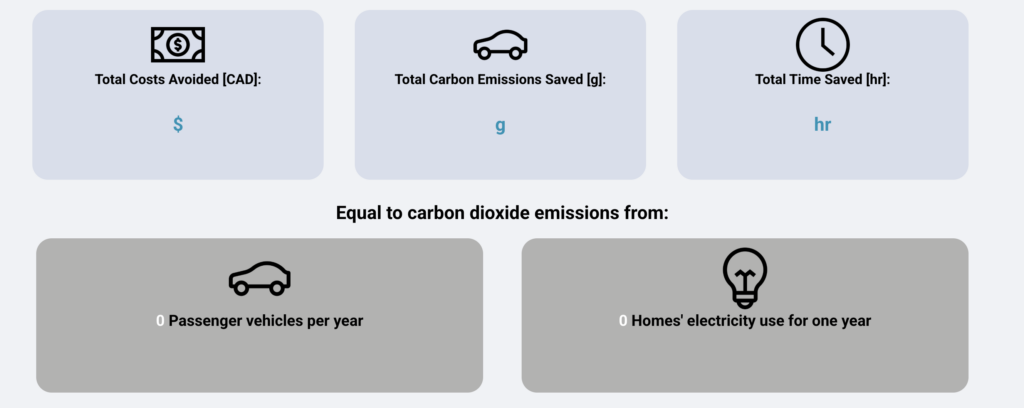
To help organizations measure and maximize these benefits, the CASCADES Virtual Care Carbon Accounting Tool (VCCAT) supports the estimation of travel-related carbon and financial impacts associated with virtual and in-person care. Combined with thoughtful implementation strategies, equitable access planning, and sustainable technology practices, virtual care can play a meaningful role in building a lower-carbon healthcare system
Playbook

Formalin Recycling Circuit Protocol
Maggie Chen, Western University & London Health Sciences Centre
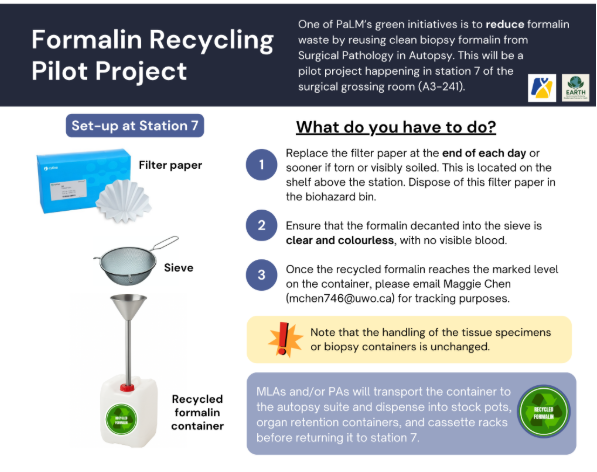
Formalin represents a significant source of chemical waste in pathology laboratories, with both its production and disposal carrying substantial environmental and financial costs. This resource outlines the formalin recycling methodology piloted within the Pathology and Laboratory Medicine Department at London Health Sciences Centre (LHSC). The initiative involved collecting and reusing clear formalin from surgical pathology biopsy specimens for subsequent use in the autopsy suite. Based on the results of this one-month pilot, projections indicate that expanding the protocol across all workstations for a full year could enable LHSC to save more than $3,000 annually in procurement costs while preventing 2,170 kg CO₂e emissions. By documenting and sharing this approach, we aim to support the operationalisation of sustainable waste management practices across other pathology departments and hospitals. For additional information or to request the final report and detailed results, please contact maggiee.chen@mail.utoronto.ca.
Protocol

Waste Audit and Reclassification Protocol
Western University & London Health Sciences Centre
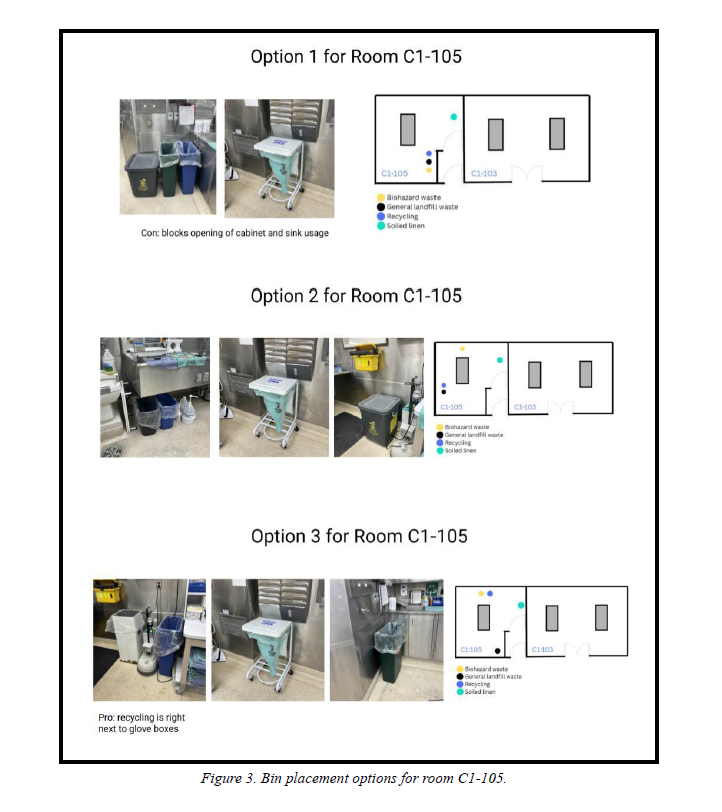
Hospitals frequently overclassify biomedical waste, resulting in unnecessary environmental impacts and increased disposal costs. This resource outlines the waste audit and reclassification methodology developed and implemented by staff in autopsy suite of London Health Sciences Centre (LHSC). Following this protocol, the initiative achieved a 56% reduction in annual waste disposal emissions and a 62% reduction in disposal costs, preventing 1427 kgco2e from being released into the atmosphere annually. By documenting and sharing this approach, we aim to support the operationalisation of sustainable waste management practices across other pathology departments and hospitals. For additional information or to request the final report and detailed results, please contact maggiee.chen@mail.utoronto.ca.
Example Protocol

The Reprocessing Pathway at NYGH
This video presented sustainable perioperative care practices through the use of reusable anesthesia components and outlined the reprocessing pathway at North York General Hospital. It highlighted ways to improve the sustainability of perioperative care and provided an overview of additional learning resources, including an introduction to sustainable health systems e-learning module and an overview of perioperative sustainability action areas from CASCADES.
Video

Bring your own reusable bag -NYGH
This video introduces the Bring Your Own Reusable Bag Initiative at North York General Hospital
Video

Reusables First: Prioritizing reusables in Canadian healthcare settings
This webinar explains the “reusables first” approach to sustainable procurement, which prioritizes reusable products and devices over single-use disposables whenever clinically safe to do so. It highlights how healthcare procurement can help reduce the sector’s environmental impact by decarbonizing supply chains and adopting more sustainable practices to support planetary health and climate mitigation. The session features healthcare professionals from British Columbia and Ontario who share their experience implementing reusable-first strategies in clinical settings and discuss practical opportunities for broader adoption across the health system.
Webinar

Reusables in Quebec healthcare: Between research and action
This webinar explores the growing movement in Quebec to adopt reusable products and devices as a strategy for advancing sustainability in health care. It explains how shifting from single-use disposable products to reusable alternatives can reduce resource extraction, waste, and pollution while improving supply chain resilience and potentially lowering long-term costs. The discussion features Quebec-based researchers and healthcare professionals sharing insights on the environmental and financial differences between reusable and single-use products, as well as barriers, facilitators, and real-world experiences implementing this transition in health care facilities.
Webinar