This playbook introduces the SE-QI framework and provides background information, resources, and considerations for embedding sustainability in healthcare improvement projects. It was developed in collaboration with key partners and experts in QI across Canada. It serves as a resource for clinicians, health care professionals, students, trainees, and decision-makers involved in QI work, aiming to inform them of: Sustainability-Embedded Quality Improvement (SE-QI) positions quality improvement (QI) as a practical pathway for embedding sustainability within clinical and operational practice. This playbook introduces the SE-QI framework and provides background information, resources, and considerations for embedding sustainability in healthcare improvement projects. It was developed in collaboration with key partners and experts in QI across Canada. It serves as a resource for clinicians, health care professionals, students, trainees, and decision-makers involved in QI work, aiming to inform them of:
Why SE-QI is an essential and practical approach to quality improvement in healthcare,
What tools are available to support planning and implementation, and
how to effectively implement SE-QI into practice to advance high-quality, low-carbon, resilient healthcare.
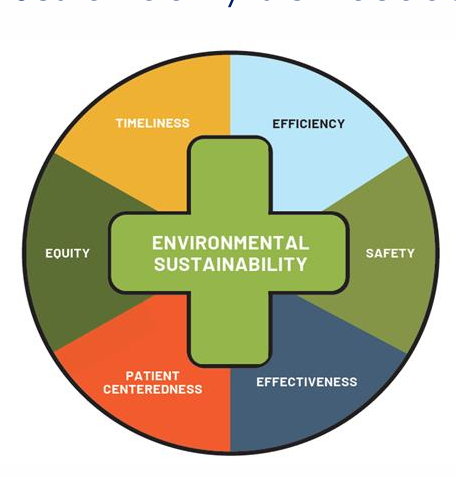
This SE-QI toolkit will help individuals and teams incorporate environmental sustainability into quality improvement (QI) initiatives, and envision how you can adjust, measure and report those impacts.
Sustainability in Quality Improvement
Sustainability in Quality Improvement (SusQI) is an approach to improving healthcare in a holistic way, by assessing quality and value through the sustainable value lens. In SusQI, the health outcomes of a service are measured against its environmental, social and economic costs and impacts to determine its “sustainable value”.
WHO is calling on all civil society organizations and other partner organizations to engage with the campaign and accelerate progress at achieving effective hand hygiene at point of care!
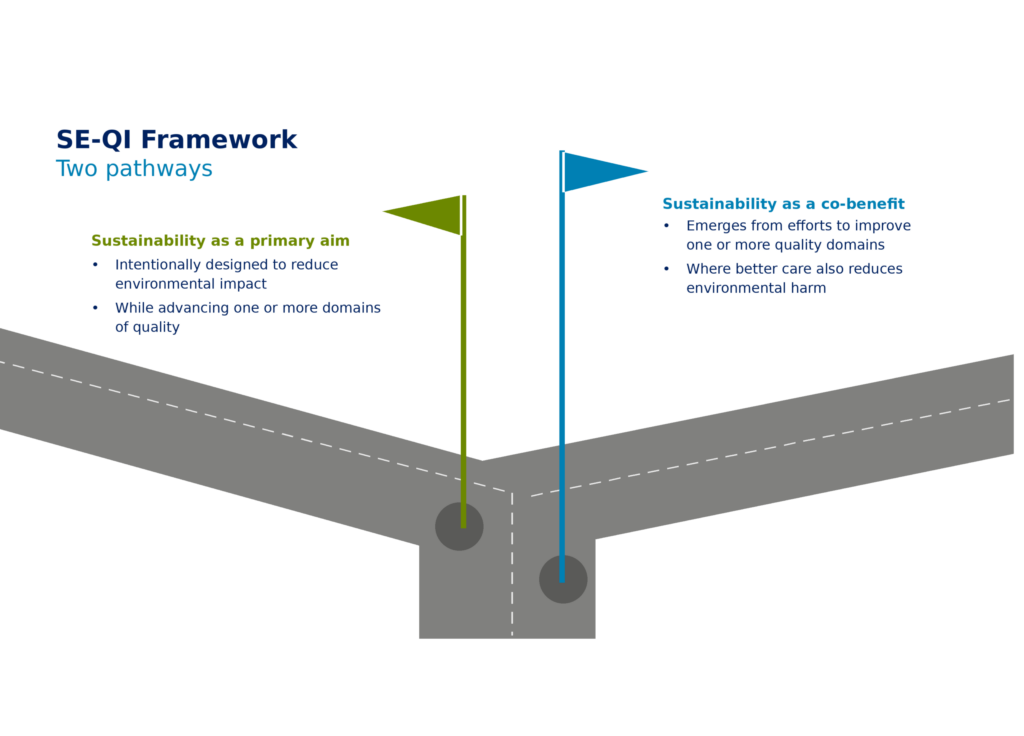
The SQUIRE-ENV extension is being led by the Centre for Quality Improvement and Patient Safety (CQuIPS) in collaboration with CASCADES and national and international quality improvement leaders. Building on the internationally recognized Standards for Quality Improvement Reporting Excellence (SQUIRE), this extension establishes structured guidance for reporting environmental sustainability in quality improvement projects where sustainability is a co-benefit or primary aim. Because SQUIRE is widely used by journals, conferences, and healthcare systems to report improvement work, SQUIRE-ENV will help embed sustainability into how QI initiatives are designed, documented, and shared. Publication is anticipated in 2026.
My research’s purpose was to help fight the global COVID pandemic by helping ethanol producers produce USP grade ethanol as well as study the environmental impacts of producing USP grade ethanol.
We estimate the direct and indirect rebound effects from energy efficiency improvements by UK households. We allow for the capital cost of the improvement, together with the emissions embodied in the relevant equipment. We find rebound effects to be relatively modest, in the range 5–15%. The anticipated shift towards a low carbon electricity system will lead to larger rebound effects.