La version française du site est en cours de révision et sera finalisée sous peu.
Antimicrobial resistance (AMR) occurs when bacteria, viruses, fungi and parasites do not respond to antimicrobial medicines.
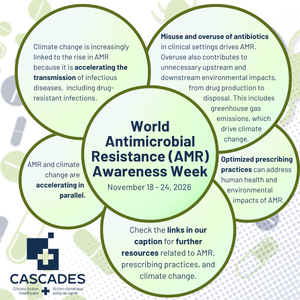
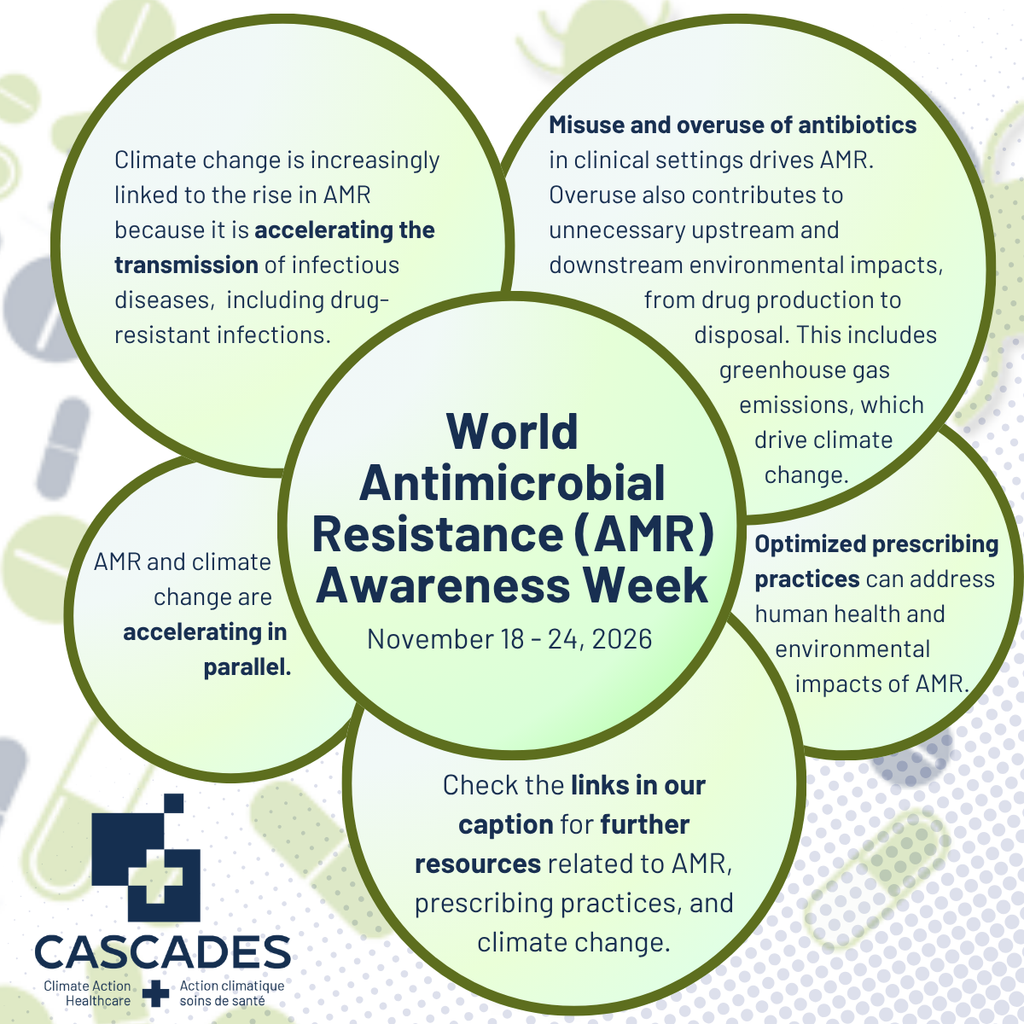
Antimicrobial resistance is recognized as a global threat, accelerated by misuse and overuse of antimicrobial medications. High worldwide use of antibiotics in particular is leading to rising levels of drug-resistance, which have immense clinical ramifications and large impacts on food production. Climate change is contributing to the rise in antimicrobial resistance through increased spread of infectious diseases, including drug-resistant infections. Antibiotic overuse also contributes to unnecessary upstream and downstream environmental impacts, from drug production to disposal. This includes greenhouse gas emissions, which drive climate change, further contributing to the conditions that amplify antimicrobial resistance.
November 18th – 24th is World Antimicrobial Resistance (AMR) Awareness Week. To learn more about how this issue impacts human and planetary health, consider taking our new course, Introduction to Environmentally Sustainable Hospital Pharmacies, and checking out CASCADES’ pharmacy-related resources. These resources address, among other things, the environmental contributors to and impacts of rising drug resistance levels, and explore methods to optimize medication and prescribing, reduce environmental impacts, enhance climate resilience, and improve clinical outcomes.