Introduction
Anatomical pathology plays a critical role in diagnosis, yet it carries a significant environmental and operational footprint. Studies from France highlight that laboratory emissions are driven largely by supply chains—especially chemicals and immunohistochemistry reagents—alongside energy-intensive equipment, transportation, and storage. At the same time, routine submission of all surgical specimens, regardless of diagnostic value, contributes to rising costs, staff workload, and unnecessary waste. In a resource-constrained healthcare system, balancing diagnostic benefit with environmental and financial impact is increasingly essential.
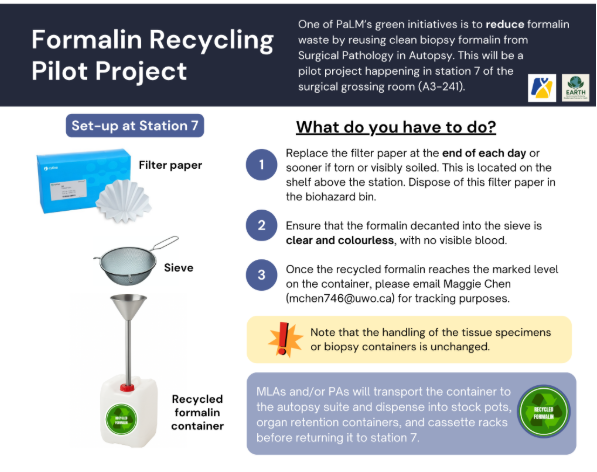
A shift toward evidence-based specimen management is key. Each specimen type should be evaluated for both cost (processing, storage, materials, and labour) and clinical utility (diagnostic yield, likelihood of actionable findings, and risk of missed pathology). Emerging guidelines support selective exemption of low-yield specimens from full microscopic examination, or limiting them to gross assessment only. Additional tools include reducing material retention, optimizing test utilization, recycling chemicals like formalin, and improving energy efficiency in laboratory operations.
Sustainable transformation requires coordinated governance, education, and quality assurance. Collaboration across laboratories, clinicians, and regulatory bodies enables consensus-driven policies tailored to local needs. Ongoing evaluation, shared knowledge, and staff engagement ensure that anatomical pathology services remain accurate, efficient, and environmentally responsible.
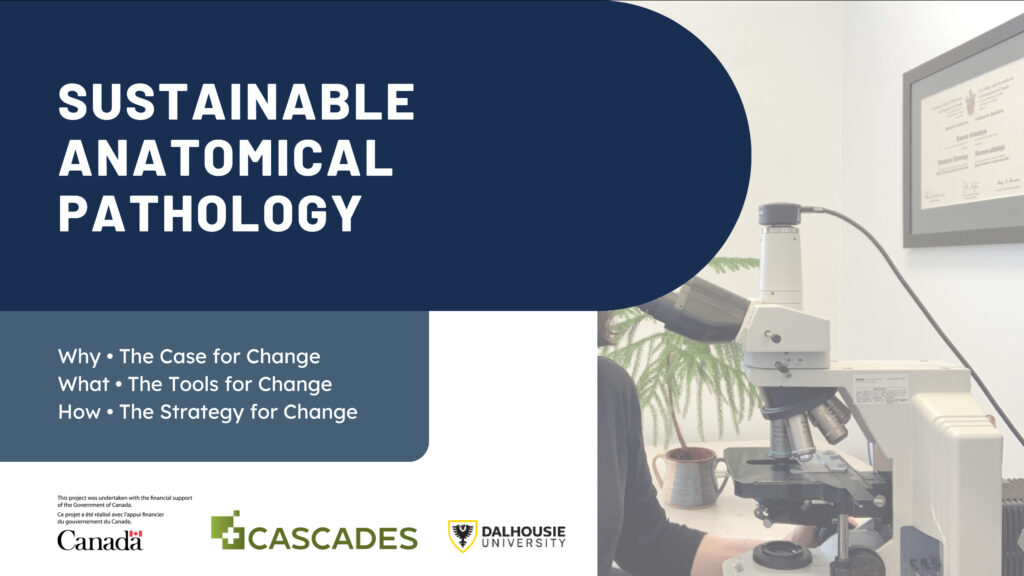
Playbook: Sustainable Anatomical Pathology
Suggested Citation:
Laurette Geldenhuys, Erica Schollenberg, Gillian Bethune, Maxine Adams-Small, Syndy Leblanc, Katherine Chornenko, Michael Bonert. Sustainable Anatomical Pathology. Version 1.0. [Internet]. CASCADES; 2025 [cited DATE]. Available from https://cascadescanada.ca/.